

The Creative Morgue
Where Sparks Wait to Come to Life

When I was in college, my graphic design instructor, Leroy Porter, had a huge file cabinet he called The Morgue.
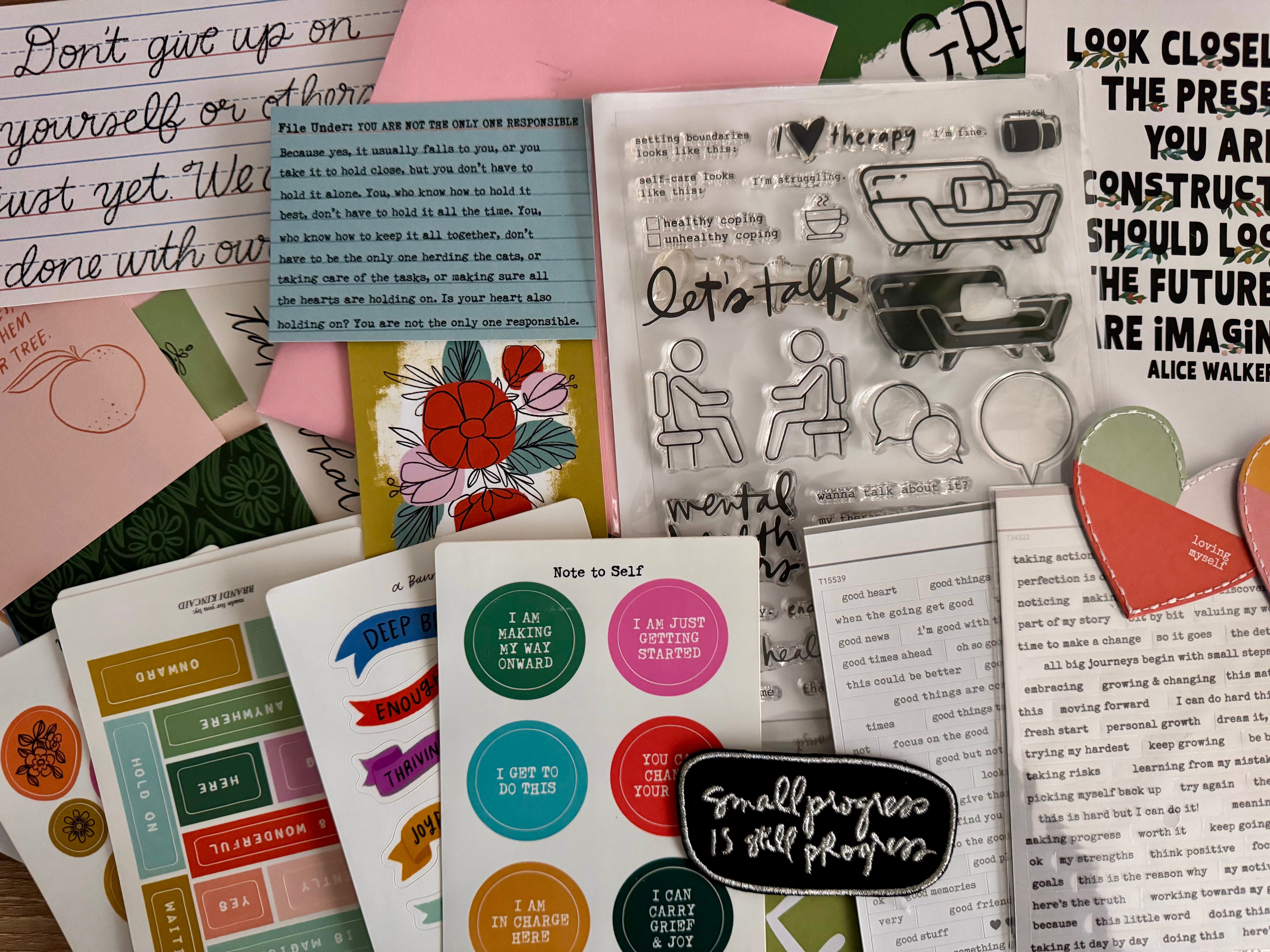
Inside it was a treasure chest of everything and nothing all at once—pages from magazines, bits of colored paper, torn book pages, packaging, paint chips, photos, typography cutouts, scraps of fabric, and anything else that could spark an idea. It was organized in a way that only an artist would understand: by color, texture, culture, region, even emotion.
He told us that everything in that cabinet was dead until we gave it life. That was the rule of the morgue. It was a place where idea sparks remain until someone pulled them out and breaths creative energy into them.
That lesson never left me.
A creative morgue isn’t about death. It’s about resurrection. It’s where you store the fragments of beauty, memory, and curiosity that will one day become art.
Over the years, I’ve built my own versions of the morgue—some physical and some digital. Each one holds the things that feed my imagination and pull me out of creative blocks.
Creativity doesn’t come out of nowhere. It comes from everything you’ve seen, touched, and collected. A morgue just helps you organize the sparks.
I don’t know about you, but I can recall multiple times I had an idea I knew was good, thought I would remember it, then forgot it within seconds. If I had simply recorded it as it was flowing, the idea would have been stored for me to marinate on later.
That is why I have given myself multiple ways to capture those sparks.
The Digital Morgue
Pinterest is my favorite digital morgue.

It’s perfect for storing inspiration without needing physical space. One of my favorite boards is called Colors, filled with pins organized by…color. When I feel like making something blue, or green, or pink, I scroll through that board.
Pinterest also feeds my visual storytelling side. I’ve collected boards for illustrated journals, illustrated recipes, character design, and visual prompts. If I’m starting a journal page and don’t know where to begin, I open one of those boards, and within minutes, I’m sketching again.
You can do the same. The trick is to curate it with intention. Don’t just pin everything you see. Pin what moves you. Pin what you’d want to bring back to life.
Here are a few of my other boards:
The Physical Morgue
As much as I love the digital morgue, your girl must touch paper. I’m a designer. I love texture!
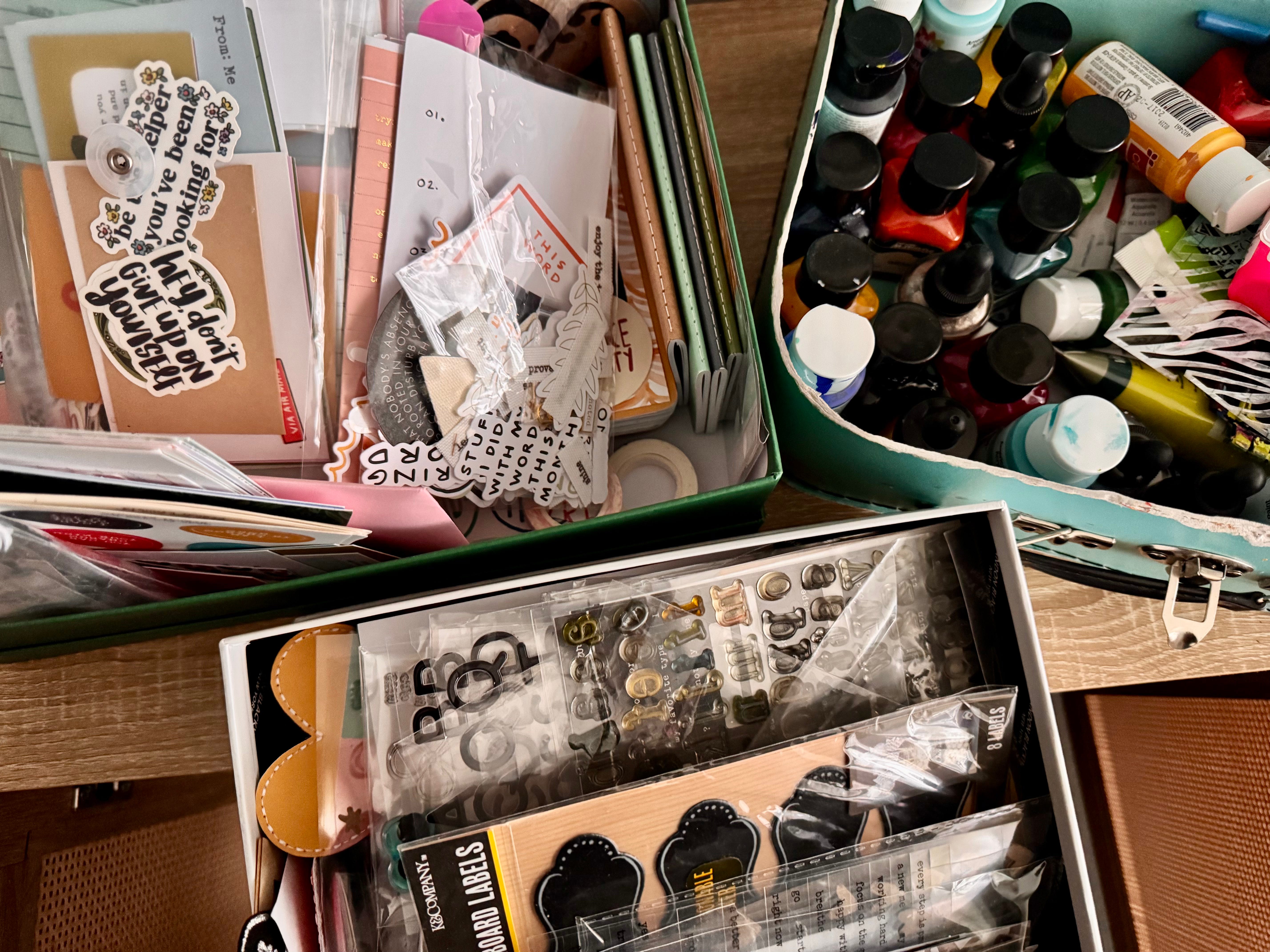
Whenever I’m building a mixed media page, I pull from those boxes. I have a rule that I can’t buy anything new for my art pages unless I have emptied the boxes. I have yet to empty the boxes and using what I have forces me to be creative with what I already have.
Physical morgues are great for anyone who loves working with texture. You can organize by color or material, or just throw everything into one chaotic box and call it your treasure chest. Either way, it’s about having inspiration you can touch.
The Commonplace Journal
Another version of a morgue that people often overlook is a simple notebook.
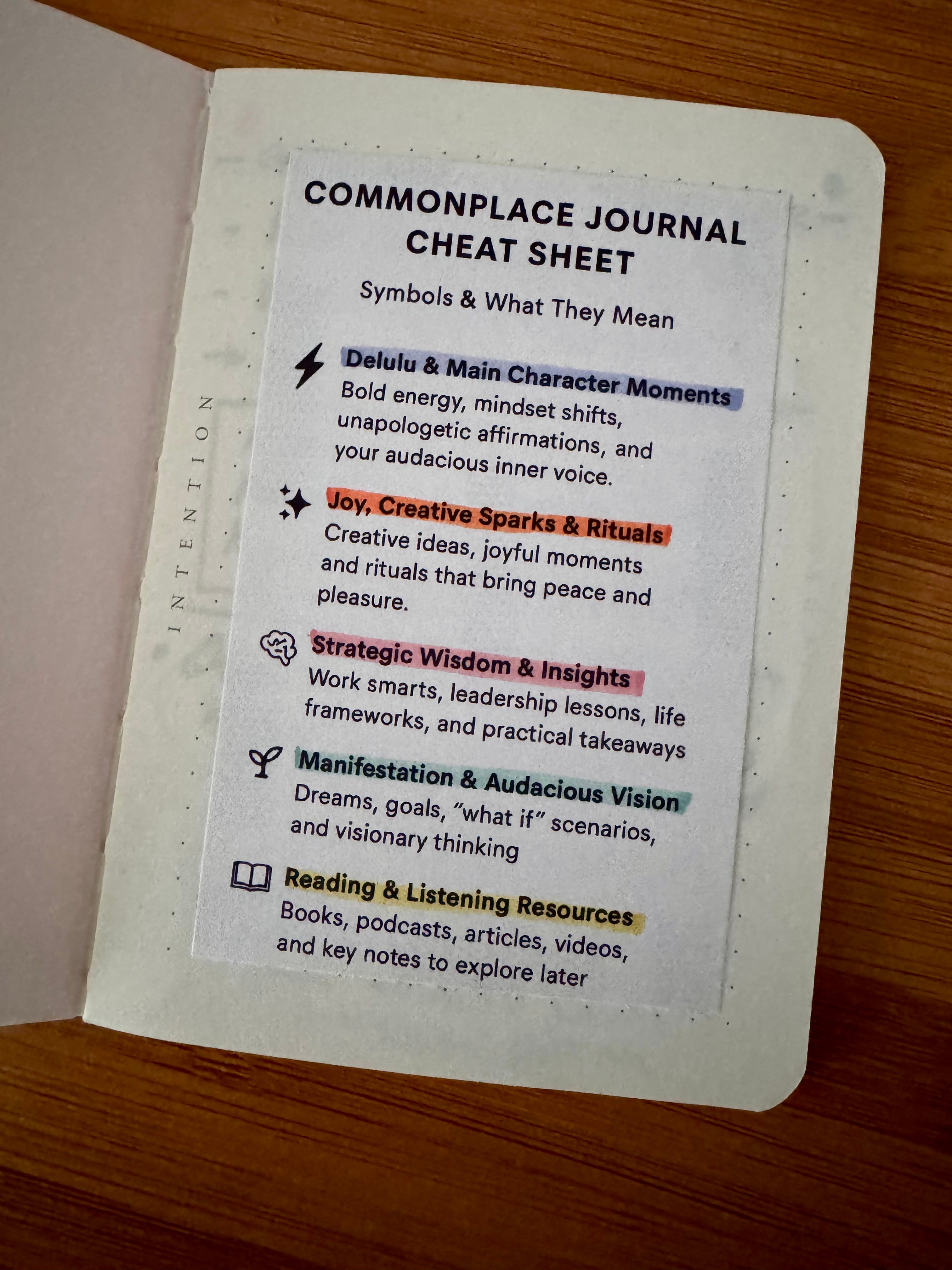
A written journal can be a morgue of thoughts and phrases. I keep what’s called a commonplace journal—a book where I write down quotes, ideas, or random thoughts I don’t want to forget. Physically writing it connects me to it in a way that screenshots can not.
This kind of morgue isn’t visual, but it’s just as powerful. Words have energy, and when you gather them, you build a personal archive of creative sparks.
The Everyday Morgue
You’re already carrying a morgue in your hand: your phone.
Every photo, every voice memo, every screenshot—these are modern-day clippings. I use my phone to capture moments that catch my eye, or I’ll record a quick voice note when an idea sparks and I don’t want to lose it.
Scrolling through my photos sometimes feels like walking through a visual diary of ideas. That pattern on the sidewalk. The way light hits a building. A random sign that made me laugh. All of it can become a seed for something later.
You don’t need fancy tools. You just need awareness and the willingness to collect.
How to Start Your Own Morgue
If this idea is calling to you, here’s how to build your own creative morgue:
1. Pick your format.
Choose a digital folder, a Pinterest board, or a physical box. You can always expand later. The key is to have a place where your ideas can live.
2. Collect what catches your eye.
Don’t wait for a reason. Save anything that stirs something in you—an image, a quote, a color palette, a pattern, a photo, a lyric, a piece of paper, even a sound. Your morgue should be built on instinct, not logic.
3. Sort or don’t.
You can organize by color, theme, or mood—or leave it be. There’s no right way to build a morgue.
4. Visit it often.
Go through your morgue regularly. Let old inspiration meet new eyes.
5. Bring something back to life.
Challenge yourself to use at least one thing from your morgue in a creative project this month. Draw from a photo you saved. Use a quote as a journal prompt. Turn an old color swatch into a painting.
The best thing about a morgue is it is there when you need it.
The morgue isn’t just storage—it’s a living archive of your curiosity.
Don’t overthink starting one. Just start collecting what calls to you. One day, you’ll open that box, that folder, or that Pinterest board, and find the exact spark you need.
Remember, everything in a morgue is dead—until you bring it back to life.
Until next time, stay curious and keep something this week just for yourself. Let me know what you liked about this week’s note.

If you’re new here, Analog Notes welcome, and subscribe if you want to stay in this groove with me.